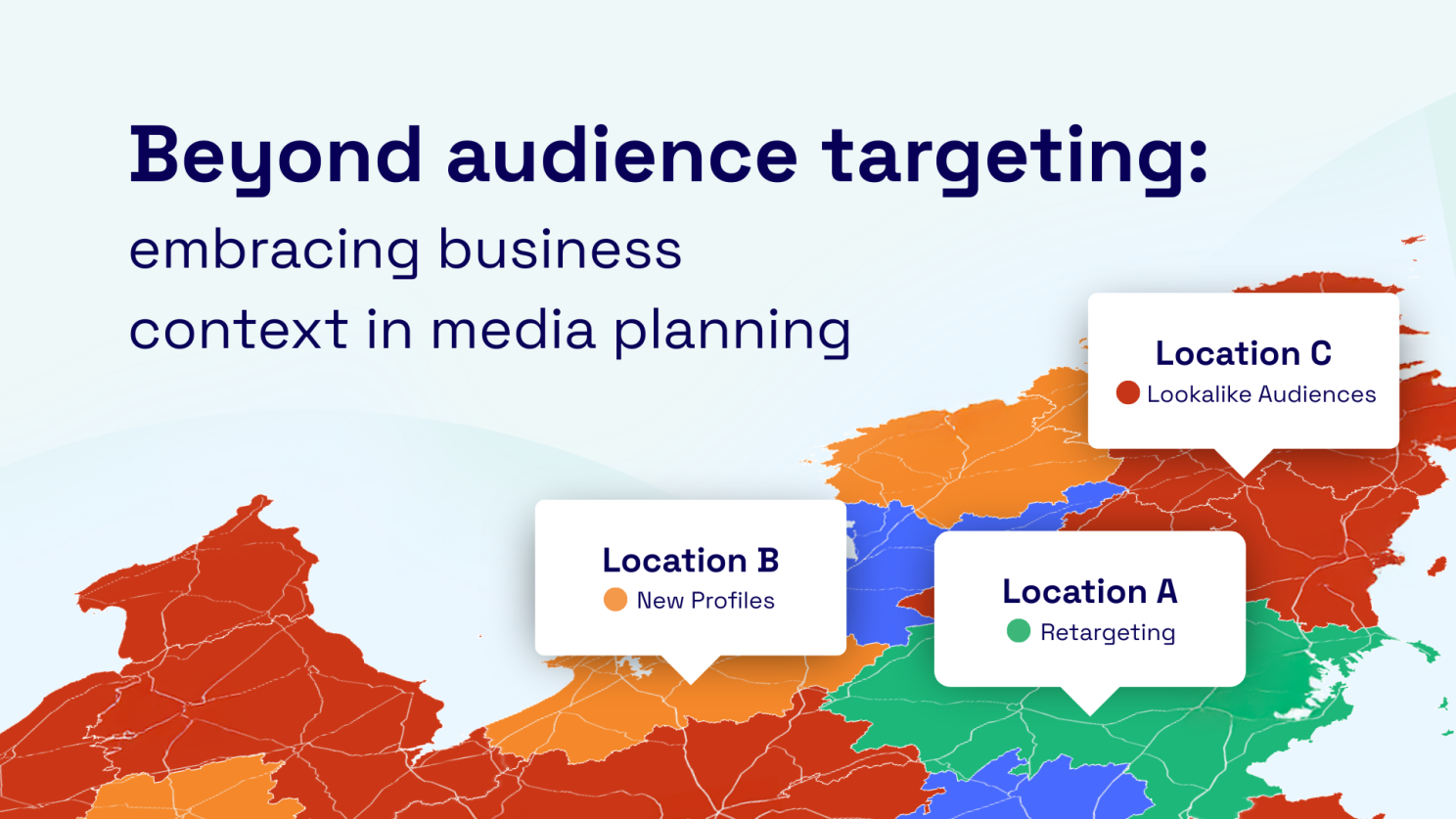
From Audience-Only to Business Context Planning
14 November 2025
Share this article


We’ve built our teams into highly specialized, channel-specific experts. We have a CTV team focused on reach, a DOOH team focused on high impact locations, and a performance team (Display, Social) focused on conversion.
The problem? We plan in silos, but our business is built on two truths that tear those silos apart.
Truth #1: Your customer is channel-less. They don’t care about (y)our internal org charts. Their journey is fluid. They don’t think “online” or “offline”; they just shop. In fact, the vast majority of consumers now expect a seamless experience, researching online before buying in-store (and vice-versa). And we make them see a CTV ad at home, get a social post on the bus, and walk past a DOOH screen at lunch…
Truth #2: Your market context is everything. While the customer journey is fluid, the context of that journey is fiercely local. The “job-to-be-done” for your brand in Chicago, where you’re a market leader, is completely different from your job in Miami, where you’re a challenger needing to conquest.
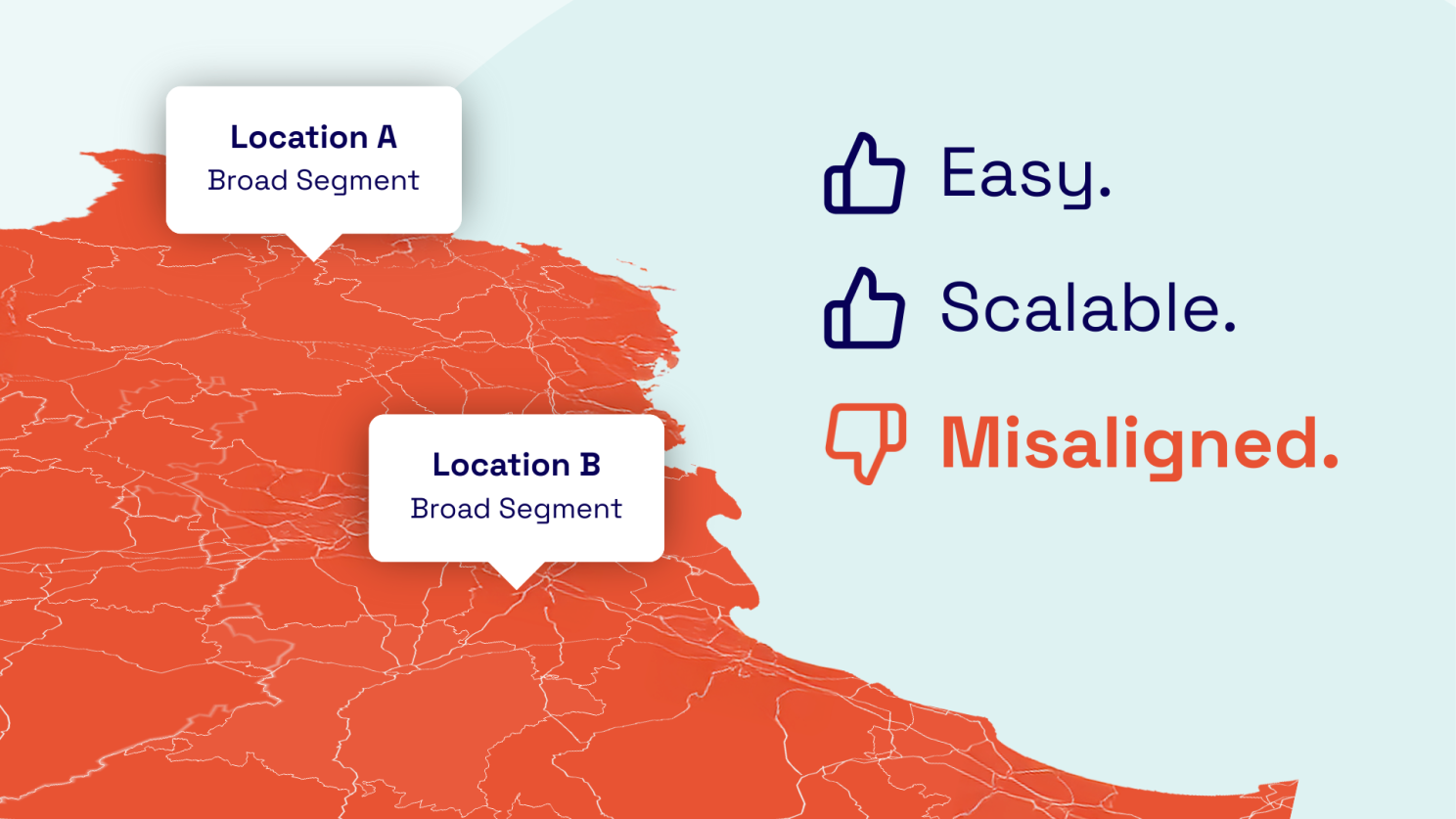
For years, the industry’s answer to this fragmentation was “The Old Playbook”: chase a “unified audience.” Buy the same “Auto Intender” or “QSR Loyalist” segment across every platform and every city.
Let’s be sharp: This one-size-fits-all model is dead.
It’s not just inefficient; it’s a colossal waste of capital. It means spending your premium CTV budget on markets that already have 90% brand awareness. It means running expensive “retargeting” ads in cities where you have the most loyal clients, completely missing the competitor rising two towns over.
The math on this is brutal:
That 30% of your budget you’re wasting by ignoring granular business context is precisely the +30% performance you’re leaving on the table.
This is the central thesis at Locala: audience is a response to brand context.
Long story short: If your 2026 plan still starts with ‘target audience’ instead of ‘target context’, it’s already outdated.
Keep reading: I’ll break down how this “context-first” approach changes the game for every channel in your mix, and end with a concrete playbook of questions to accelerate your 2026 planning.
The challenge we all face is that our insights are often as siloed as our teams. We have web analytics in one dashboard, store visit reports in another, and competitive data in a static PowerPoint.
This fragmentation makes it impossible to plan for a “channel-less” customer.
To win in this new landscape, media planning must find its roots in omnichannel insights. It must be:
This level of unified, actionable planning is the goal, but it has been operationally impossible for most teams, until now.
To help kick-start this process for 2026, here are the 10 questions every retail and brand leader should be asking their teams and partners right now:
Answering these questions moves you from complexity to clarity.
It’s how we build resonance and drive real growth, one market at a time.
This “Business Context Planning” approach is the essential foundation for everything that comes next. We created Omni Planner specifically to answer these questions and eliminate the friction between strategy and execution.
But a great plan is useless if it dies on a slide. Planning is the first step; insights actionability is the critical second. Location-Based Advertising (LBA) isn’t just a planning theory; it’s an activation concept that makes every channel in your mix smarter.
Here’s how.
The one-size-fits-all national plan is over.
Stop chasing who. Start solving where and why.
That is how we move from managing complexity to driving real growth, one market at a time.
Here is what I recommend for your next 90 days: