Advertising's oldest promise just became a choice
November 2, 2026
Partagez cet article



I've sat in a lot of pitch meetings over the years, on both sides of the table. And there's one sentence I've heard in almost every single one of them. The right message, to the right person, in the right place, at the right time.
Agencies say it. Brands say it. It has been on so many slides for so long that most people have quietly stopped believing it.
Not because the idea is wrong. Because for a long time no national plan could really adapt at that level. You could make it work for one store, one city, one test. Try adapting it across hundreds of postcodes in the UK, every week, with budgets shifting and the weather turning, and the plan slowly falls back into one national message for everyone.But this doesn’t have to be the case anymore!
At Locala, we solve this challenge through Adaptive Advertising! A new category built to make that promise real at scale. I think it changes the conversation we have with brands and agencies far more than any new targeting feature ever could.
Adapting a campaign properly means deciding who you want to reach, where they actually are, which channel will catch them, how much to invest in each area and when. Every one of those choices moves the others. Done by hand, it's exports, spreadsheets, three teams and a lot of goodwill.
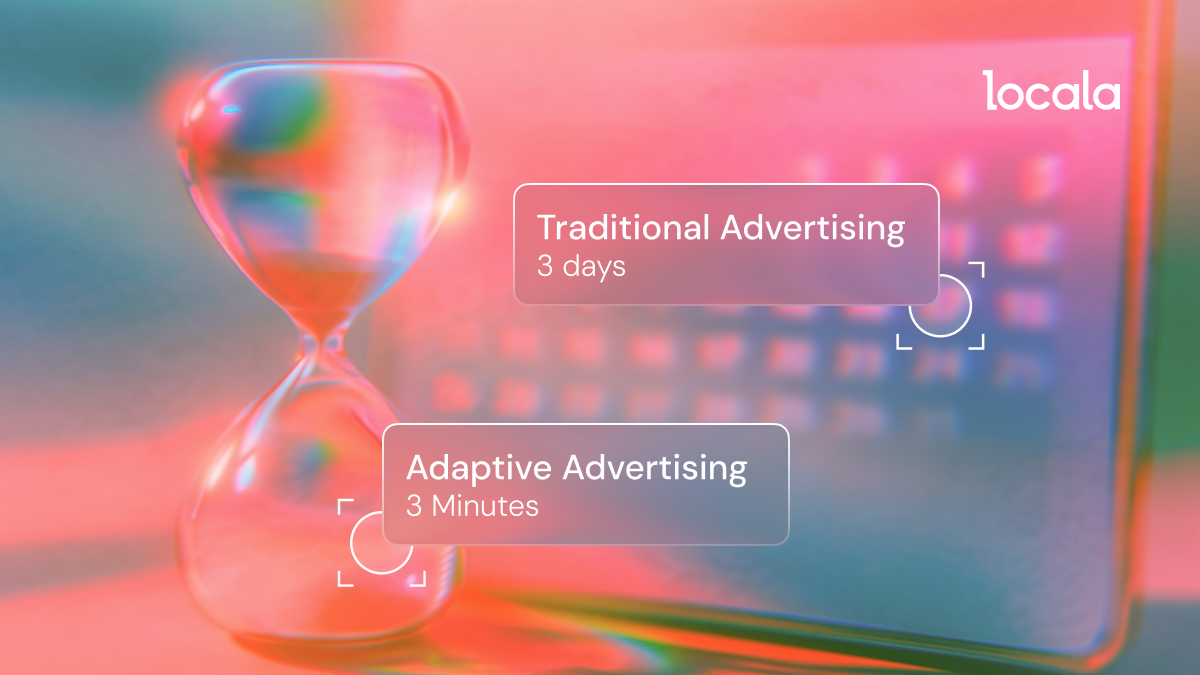
I was with the agency team working on a quick-service Coffee chain recently, walking them through what it really takes to adapt one national plan area by area when you have 2,000 restaurants in the UK and many more worldwide. Then I said that if they asked their own team to do it, it would take about three days. Nobody in the room disputed the number.
Those three days sum up the whole problem. The ambition was always there. The capacity to adapt wasn't. So the industry settled for static plans. It personalised the creative, swapped a headline, called it relevance and moved on. The plan itself never adapted.
The UK is a perfect example of why the right person was never enough on its own. The same shopper doesn't behave the same way on a Saturday afternoon in Manchester as on a weekday commute into Canary Wharf. A brand can lead on one high street and be almost invisible two towns over, where a competitor has just opened next door.
In the run-up to Christmas, a wet weekend in the North West and a dry one in the South East can call for two different plans, not just two different banners. Footfall shifts, competitive pressure rises in some areas and not in others, and people don’t use the same media in every region. When you only look at the country as a whole, you miss all of that
That's why the starting point can't only be who. It has to be where, and why. Once you understand what's really happening for a brand in each area, the right audience, the right channel and the right message follow. The audience isn't the brief anymore. It's the response to the business context.

Adaptive Advertising isn't a new campaign objective. A national strategy keeps one clear direction, while its execution adapts continuously to the business and consumer reality of each market. Audiences, areas, media mix, creative, investment and timing adapt together, not one at a time.
This is what we now do every day at Locala. We read what's happening area by area, decide where a brand should push, defend or simply hold, activate that response across channels and learn from the results so the next plan adapts even better. What used to take a team three days becomes far simpler. AI agents take the friction out of our teams' work while helping them make better decisions, and our people stay firmly in charge of the strategy.
And adapting doesn't mean the same thing to everyone. For an agency, it's about taking complexity out. Fewer manual setups, cleaner execution, results you can defend in front of a client. For a brand, it's about understanding people better. Knowing why a campaign lands in Leeds and stalls in Bristol, and keeping the brand consistent while the plan adapts underneath. Same promise, two very different conversations, and both can now be answered.
With the golden quarter under way, every brand in the UK will be chasing the right person, in the right place, at the right time. It's no longer just a promise. It's a choice. A national campaign can now adapt to every area, every week, without adding days of work.
So here's my question. Which part of your plan would you adapt first if it took minutes instead of days?