

Back-to-school is one of retail’s biggest seasonal moments — and one of its most complex.
U.S. back-to-school sales are projected to reach $85.42 billion.
Shoppers are moving across digital and physical touchpoints as they plan purchases for school, home, college move-in, and everyday essentials.
E-commerce continues to claim a major share of seasonal spending. Still, physical stores remain central to how families, students, and young adults browse, compare, and buy.
For retail advertisers and agencies, that creates a clear challenge. A single national media plan can’t reflect how differently shoppers behave across markets, neighborhoods, and moments.
Parents planning weeks ahead, Gen Z shoppers responding to trends, and college students making last-minute dorm purchases all need different signals, channels, and messages.
That’s why the most effective back-to-school strategies are becoming more dynamic, localized, and omnichannel — built around how consumers actually move, shop, and make decisions in the real world.
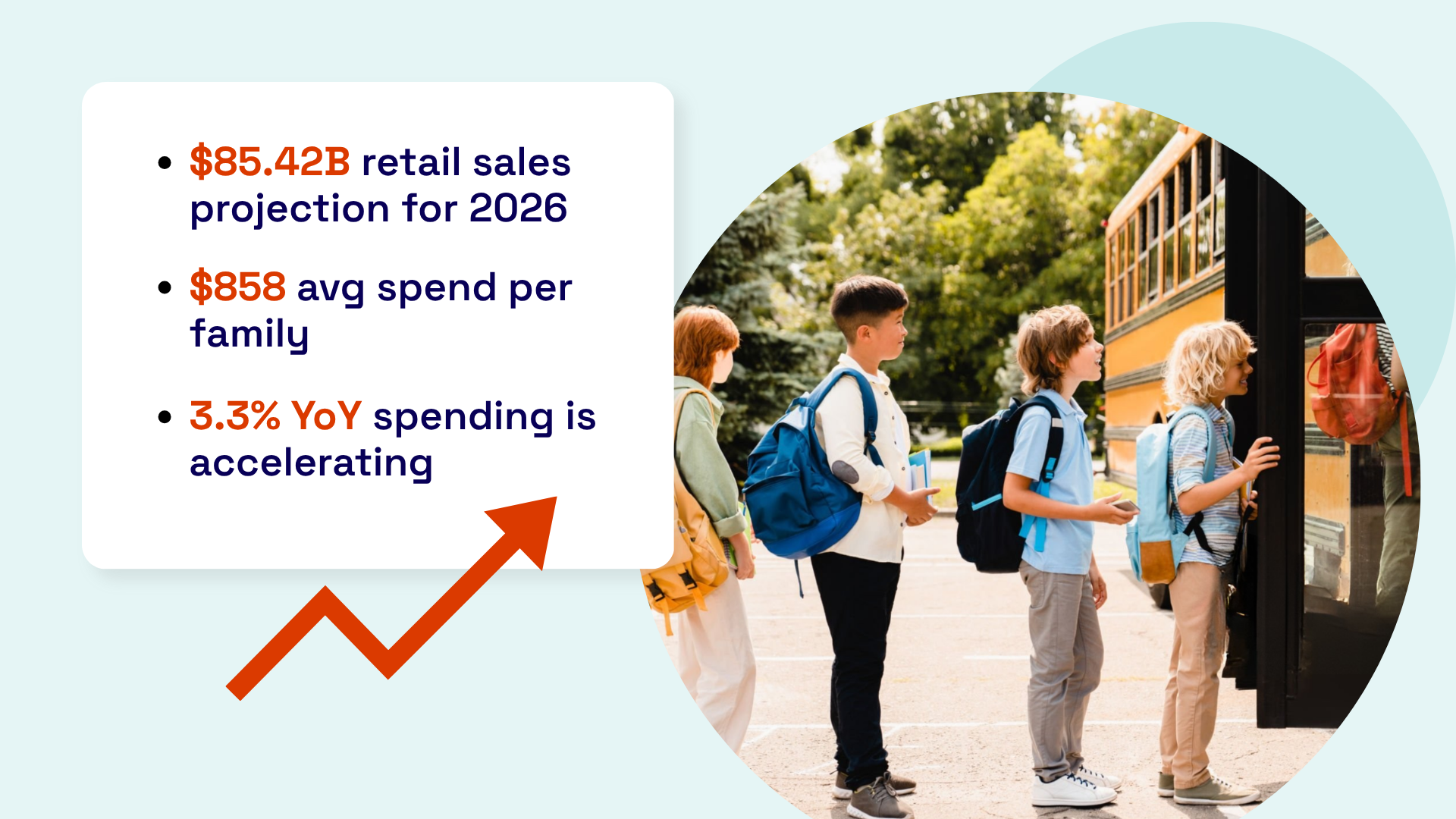
The Reality on the Ground: Context Over Demographics
Back-to-school shopping does not follow one universal path. Some consumers begin researching in July, while others wait until the final weeks before school or college move-in. Some are comparing prices online before visiting stores, while others are making decisions in the moment based on convenience, proximity, promotions, or local availability.
That means advertisers need more than broad demographic segments or static national plans.
A parent shopping for multiple children may fall under the same seasonal campaign as a Gen Z shopper looking for the latest sneaker drop. The same is true for a college student buying dorm essentials.
But each audience behaves differently. They move through different environments and respond to different messages.
To capture that complexity, back-to-school media plans should be built around three types of real-world signals:
Online Intent: What are shoppers researching right now?
Real-World Behavior: Where are they actually going, browsing, and buying?
Local Dynamics: How do store proximity, competitor presence, and neighborhood-level behavior change the opportunity?
This is where omnichannel localization becomes critical: using local consumer behavior to shape not only who you reach, but where, when, and how you activate media.
What This Looks Like in Action
Using Locala’s audience insights, advertisers can move beyond a one-size-fits-all back-to-school strategy and activate around the distinct behaviors, needs, and purchase windows of each shopper group.
For example, a national retail brief can become a more tailored omnichannel plan across key audiences:
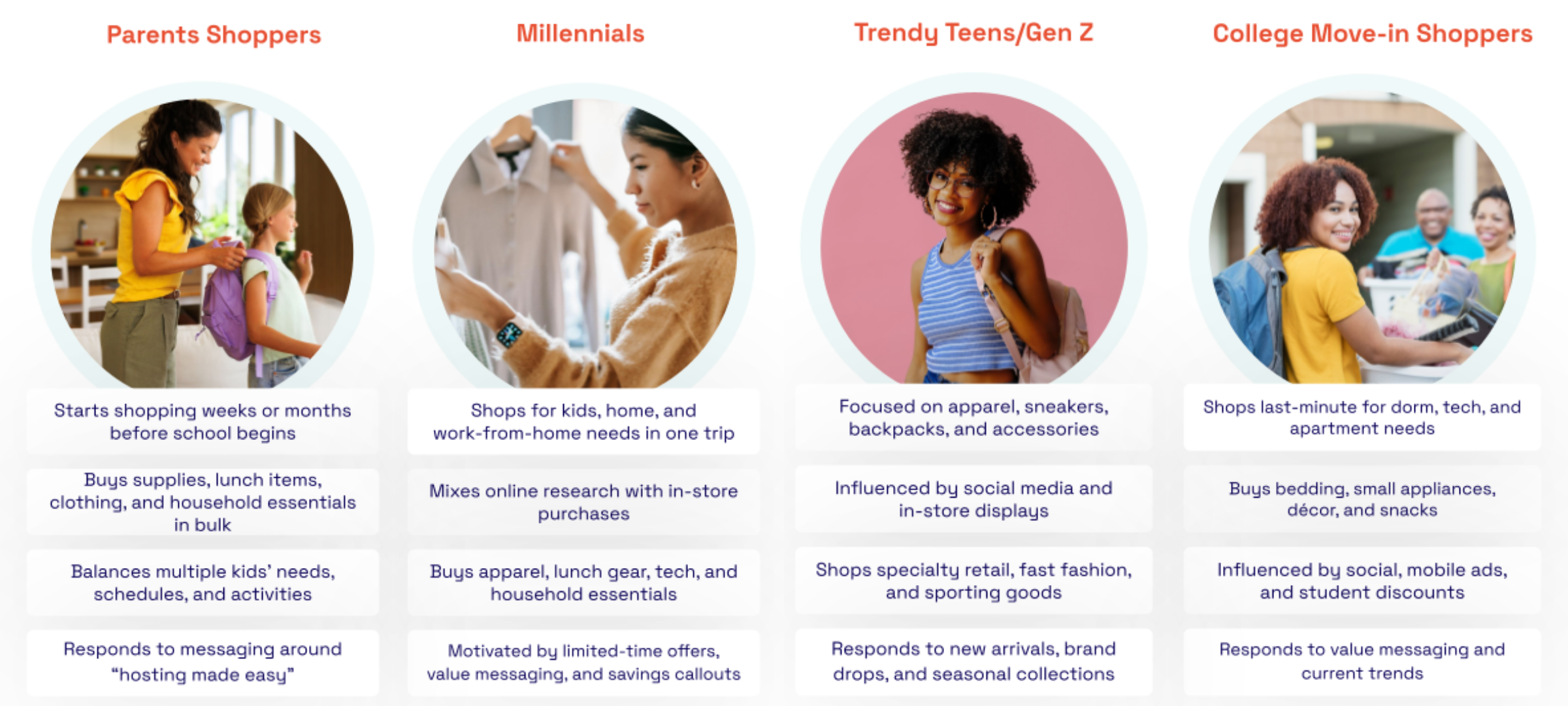
Parent Shoppers
Parents often begin shopping weeks or months before school starts. They balance supplies, clothing, lunch items, and household essentials across multiple children and schedules. Advertisers can combine online intent with real-world retail behavior to identify high-opportunity areas. Then they can activate mobile, DOOH, and proximity-based messaging around stores, school zones, and shopping districts.
Millennials
Millennial shoppers may buy for children, home, work, and themselves in the same trip. They often blend online research with in-store purchases. Campaigns can use localized intent and visitation signals to tailor messaging by market. That could include limited-time offers, value messaging, product discovery, or loyalty reactivation.
Trendy Teens and Gen Z
This audience is influenced by social media, seasonal collections, brand drops, apparel, sneakers, backpacks, and in-store displays. Advertisers can use mobile and DOOH together to reach high-affinity areas. These may include retail destinations, transit corridors, and social shopping environments.
College Move-In Shoppers
College shoppers tend to buy closer to move-in, with needs spanning bedding, small appliances, décor, tech, snacks, and apartment essentials. Campaigns can adapt to this urgency by combining mobile display, contextual CTV, student-oriented offers, and localized messaging in areas with strong student density or proximity to relevant retail locations.
These examples are illustrative, but the principle is consistent: each audience behaves differently, and each market creates a different opportunity. Locala helps advertisers translate those behavioral differences into media strategies that are planned, activated, and measured at the local level.
How to Maximize Your Back-to-School Campaign Results with Locala
Executing this level of hyper-local precision across hundreds of target regions used to be an operational nightmare, often forcing teams to flatten their strategy just to get the campaign live. Locala eliminates that friction. We bridge online intent signals with real-world mobility data through Omni Planner, allowing brands and agencies to engage consumers seamlessly at every step of the funnel.
Instead of managing siloed channels, Locala synchronizes your media to follow the natural rhythm of the consumer’s day:
- At Home (Awareness): We capture initial discovery by reaching high-value households based on real, localized digital intent signals.
- On the Go (Consideration): We intercept shoppers on the move by dynamically activating screens along the exact transit paths and high-footfall retail environments where your target audience is overrepresented.
- In-Market (Conversion): We trigger precise mobile delivery the moment consumers enter your key shopping districts, serving relevant, value-driven messaging right when they are standing ready to convert.
This automated, multi-local execution loop removes the tedious spreadsheet-slicing from your workflow. It gives planners total strategic visibility and traceable control without the operational headache.
Does a Multi-Local Strategy Actually Work? Ask Levi’s.
This approach is not just theoretical. Locala has already helped retail brands use localized media to drive measurable back-to-school results.
For Levi’s “Back in Blue” campaign, the goal was to maximize in-store traffic and support seasonal sales during the back-to-school period. Locala built a tailored strategy around two key audiences: parents and students. Mobile display was used to reach both groups, while DOOH helped engage student audiences in areas where they were overrepresented around Levi’s stores.
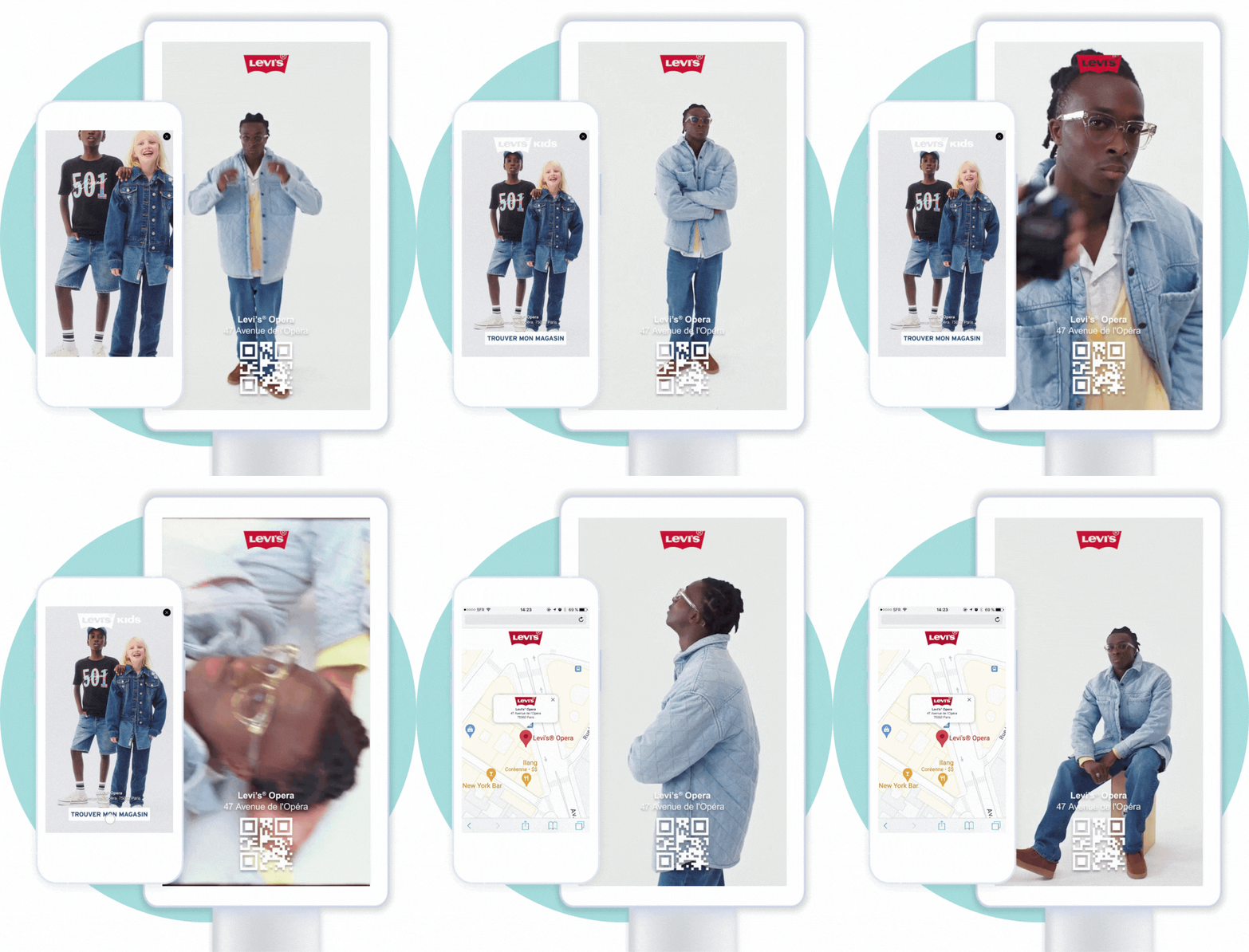
The campaign delivered:
15K in-store visits
+65% uplift in store traffic
100% of stores impacted
+15 points in intent to buy
For today’s back-to-school advertisers, the lesson is clear: local context matters. When campaigns are built around real-world behavior, audience movement, and market-level opportunity, media can do more than reach shoppers — it can help move them toward stores, products, and purchase decisions.
Winning the $85 billion back-to-school season requires moving away from fixed assumptions. By ensuring your media plan reflects the unique nuances of every local territory, you don’t just reach the right consumer—you meet them exactly where they are standing ready to convert.
Ready to see how localized intelligence can elevate your BTS strategy? Book a personalized demo with the Locala team today.