
I’ll be direct: we’re reaching a tipping point.
For the past decade, AdTech has organized itself around one central promise : the “Who.” The belief that precisely targeting a “Luxury Auto Intender” or a “Gen Z Shopper” is enough to drive performance, regardless of context.
This approach brought real value. It introduced structure, rigor, and precision to media planning. But over time, it produced increasingly standardized strategies, coherent on paper, disconnected from local realities.
My conviction today is simple: Audience-first is not wrong. It’s incomplete and that’s the problem.
Not because it’s wrong, but because something is missing. And at scale, that incompleteness destroys performance.
The hidden cost of simplified targeting
Targeting at scale has undeniably simplified media planning. Campaign setups are clean, comparable, easy to activate. But that simplicity comes with a cost that few brands actually measure: the opportunity cost.
Too often, I still see the same audience profiles activated uniformly, same pressure, same message, whether in Paris, Lyon, or in less densely populated markets. As if the local context had no bearing on the outcome.
It does.
Consumer behavior is shaped as much by environment as by identity. Without this lens, part of the investment loses efficiency, not because the audience is wrong, but because it is being activated in the wrong conditions. The same individual behaves differently depending on where they are. A strategy that ignores these variations smooths reality. And that standardization mechanically limits performance.
At Locala, we have made a deliberate choice: treat the audience as a response to context, not a starting point. Location, competitive pressure, store accessibility, the unique dynamics of each local market, these are the variables that determine whether an activation lands or is wasted.
Context is where granular strategy begins
The core limitation of purely segment-driven planning isn’t the audience. It’s what gets ignored around it.
In mature markets, I regularly see additional media pressure deliver little to no incremental impact. In growth or conquest areas, the absence of a tailored approach can significantly slow momentum. Same audience. Different context. Completely different outcome.
Investments miss the mark not because the targeting is wrong, but because the environment in which it’s activated isn’t right. Performance doesn’t come from who you target. It comes from where and why you activate.
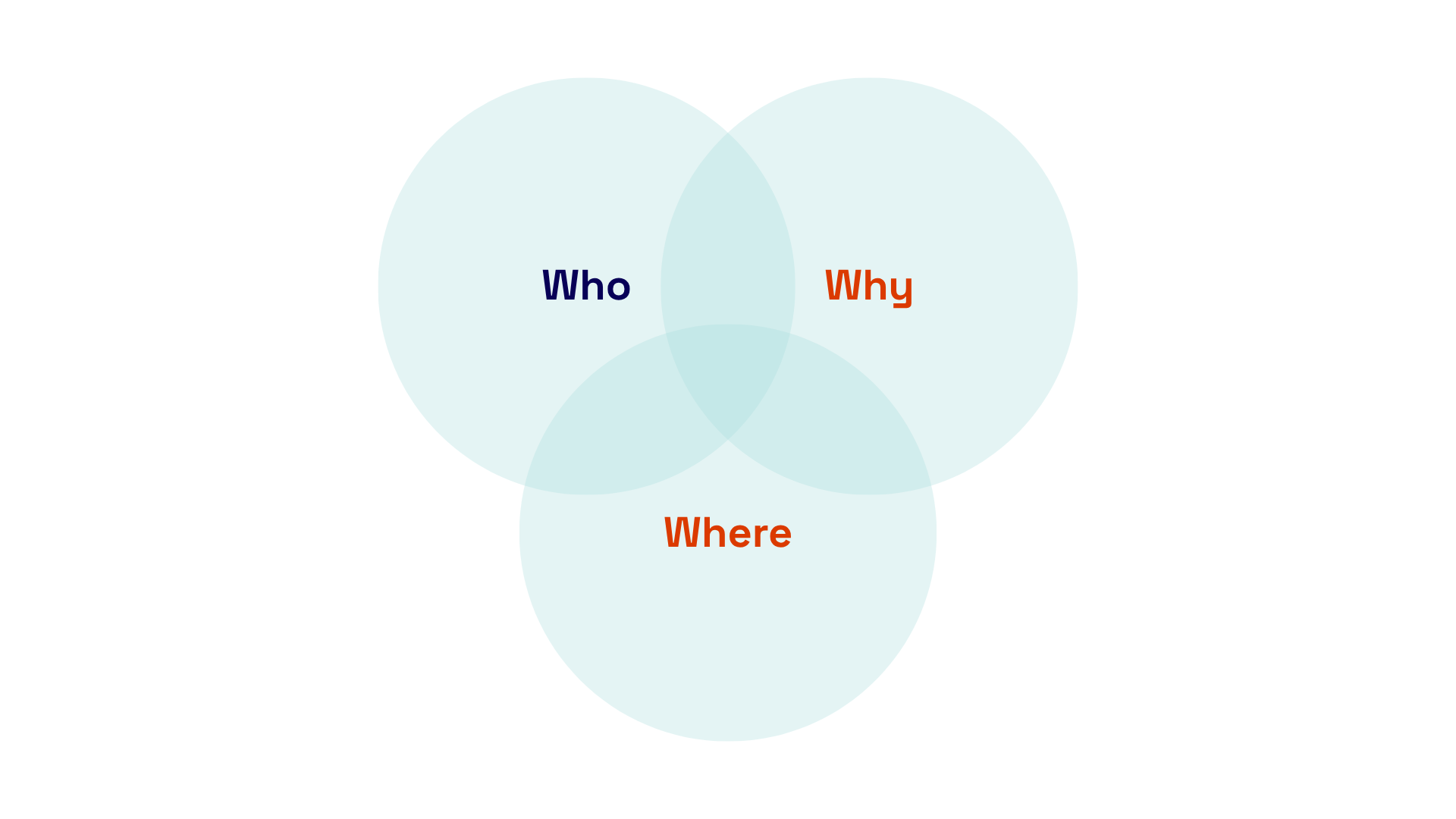
This is exactly where “who” breaks down without “where” and “why.”
What’s shifting today is the level of granularity at which strategy gets built. Not national coverage. Not uniform pressure. But a precise identification of where growth opportunities actually lie, city by city, market by market, store by store.
From identifying audiences to identifying growth
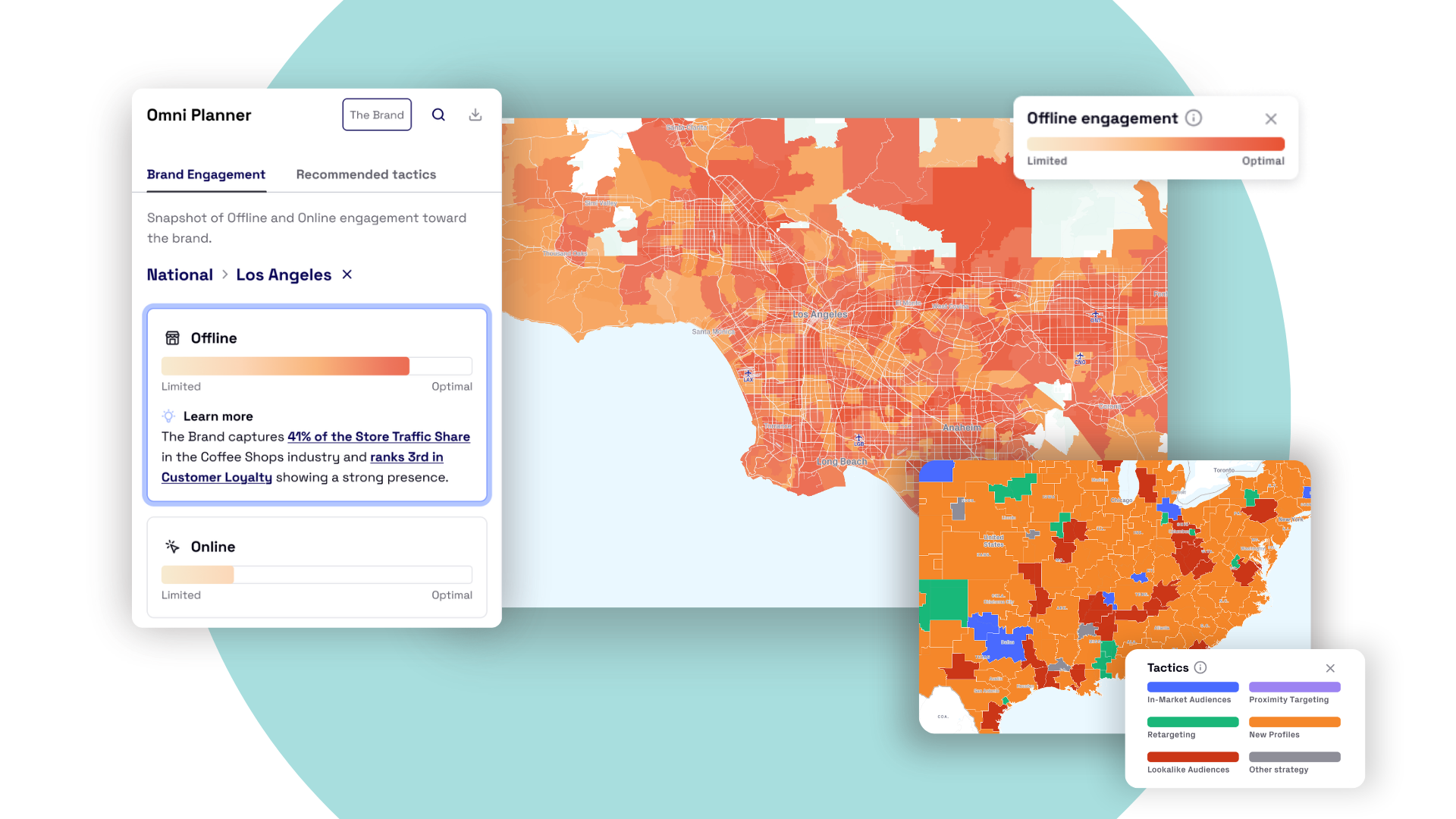
Making this possible is what we built Omni Planner for. The platform reconciles online and offline signals to surface the true dynamics of each market a brand operates in. Who you’re speaking to. Where the opportunities are. Why each activation matters in its specific context. Powered by AI, it processes vast volumes of local, digital, and physical signals with a level of precision that was previously out of reach, and finally creates a real, working connection between national strategy and local execution.
The audience remains a critical lever. But in practice, context determines the real value of every euro invested.
From insight to action
Omni Planner laid the foundation by revealing where performance truly happens. It changed how we read market opportunities. But understanding is no longer enough.
What matters now is the ability to act on it, quickly, without losing the level of precision built in the previous step.
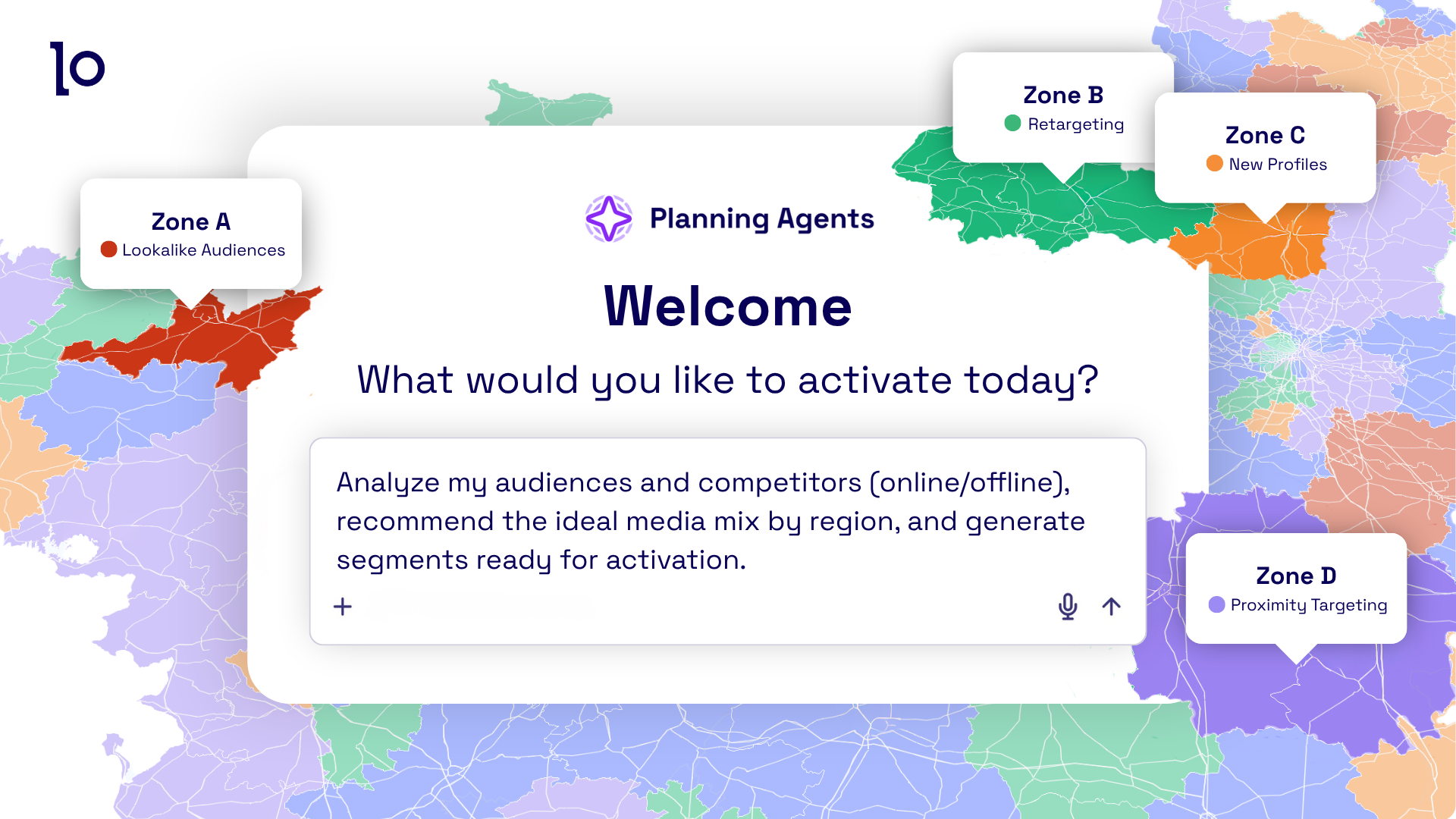
This is what our latest innovation, Planning Agents, are designed to do. They do not replace Omni Planner; they extend it. Drawing directly from its insights, they translate this granular market intelligence into immediately actionable recommendations: priority territories, audiences to capture, media pressure by area. From strategy to execution, without friction, without losing analytical depth.
From insight to decision. From decision to execution.
From strategy to execution, without friction, without losing analytical depth. No handover. No dilution. No loss of precision.
Not just faster execution. Smarter, autonomous execution.
The ambition isn’t to do the same thing faster. It is to make omnichannel, multilocal strategies truly operational, which until now have remained too complex to orchestrate with precision.
For years, “who” has been the dominant lens.
Adding “where” and “why” creates differentiation.
The future of performance isn’t better targeting. It’s better decision-making.
What comes next is the ability to act on it everywhere, at scale.
Want to learn more? Book a demo.