

Let’s be honest. The idea of neatly separated “online” and “in-store” marketing doesn’t reflect how people actually shop anymore.
Consumers have completely blurred those lines. They research on their phones, browse on the couch, compare prices in the aisle, and buy wherever it feels easiest in the moment. For brands, that means showing up seamlessly across the entire journey or risking being overlooked altogether.
Over the past year, we’ve spent a lot of time digging into how these behaviors are evolving, from our work with eMarketer on [how consumers move between digital and physical shopping] to insights from our latest [Retail Barometer], which takes a closer look at what’s changing across categories, channels, and local markets.
So what actually changed consumer behavior in 2025, and what should retailers pay attention to as we head into 2026? Let’s break it down.

Digital Discovery Is the Starting Line, Not the Finish
The shopping journey overwhelmingly begins online, regardless of where the purchase is ultimately made. This behavior confirms that digital visibility is essential even for in-store sales.
- Online research is routine: 81.3% of consumers research online before buying, with 44.7% doing so frequently—solidifying digital discovery as a habitual first step.
- Affluent audiences lead the shift: Households earning $100K+ are especially likely to research online and are notably sensitive to irrelevant messaging, reinforcing the need for precision.
- Channel-hopping is a common phenomenon: 71.4% of consumers have discovered a product online and purchased it in-store, while 68.0% have done the reverse. This symmetry confirms that omnichannel behavior is the new norm.
Focusing solely on digital conversions misses the full path to purchase. Brands must connect online engagement, such as searches, social interactions, and ad exposure, to in-store behavior with integrated attribution.
Why Physical Stores Still Matter
Despite the rise of e-commerce, the physical store remains a crucial fulfillment channel and offers an experience that digital cannot replicate.
Sensory validation & urgency drive visits: Seeing, touching, or trying a product (36.8%) remains the top reason shoppers buy in-store after researching online. Urgency follows closely at 34.9%
In-store dominates everyday shopping: 46.9% of consumers purchase everyday items exclusively in-store, and another 37.4% shop both channels, reinforcing the relevance of physical retail for essentials
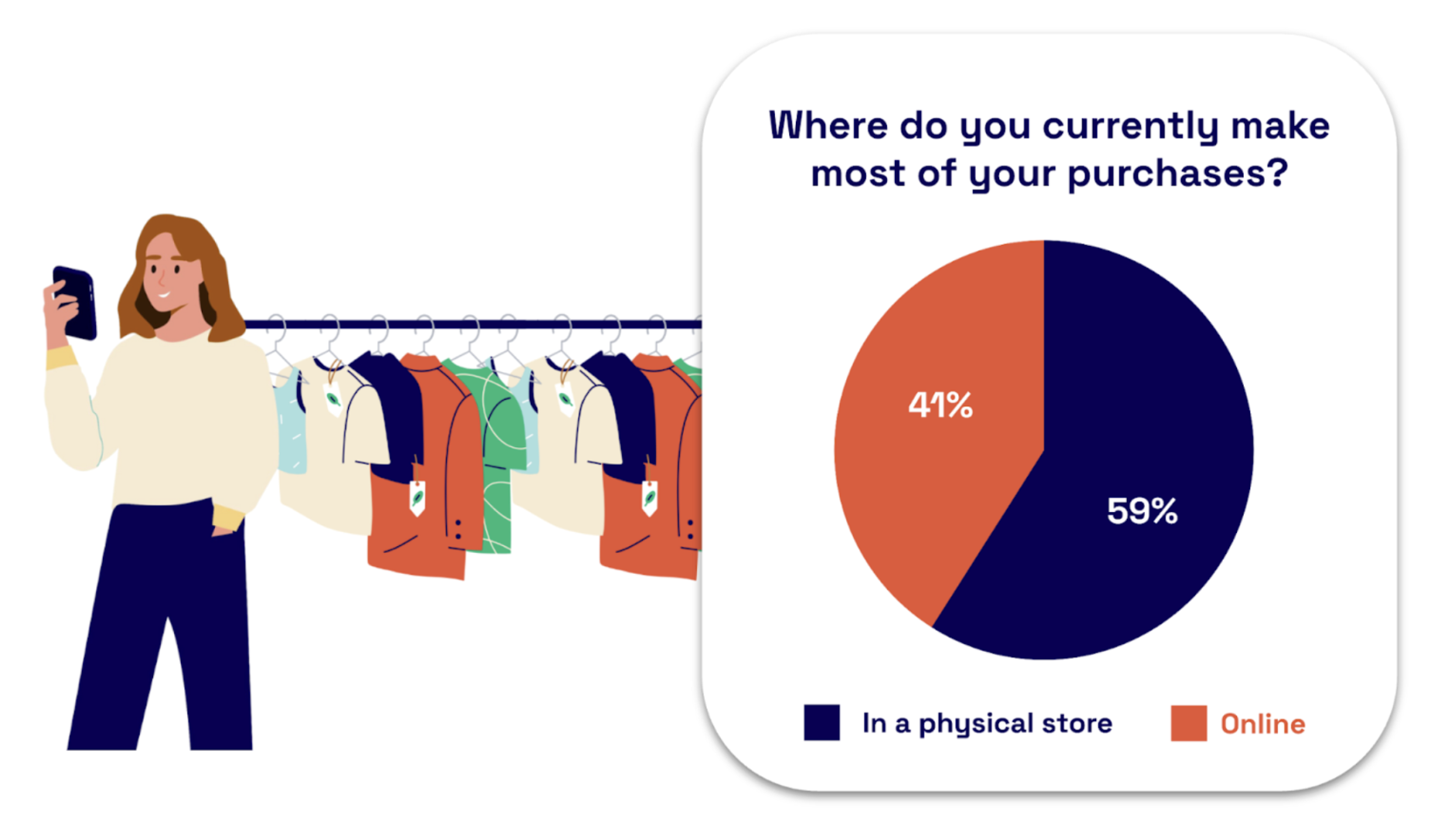
The Power of Local: 71.4% frequently choose neighborhood stores for staple items, making localized advertising a powerful bridge between online discovery and immediate offline action.
Relevance Isn’t Optional Anymore
In a channel-less world, relevance isn’t a nice-to-have. It’s the deciding factor between being noticed or being ignored. When messaging feels generic or disconnected from how, where, and why people shop, it simply doesn’t register.
Advertising Drives Real Sales: 73.1% of consumers made at least one purchase in the past six months after seeing an ad, validating advertising’s impact across channels.
Local Relevance Boosts Performance: 60.5% of respondents find ads more compelling when they reference their city, demonstrating that local context significantly increases engagement.
Loyalty Data Fuels Hyper-personalization: Identity-level insights from loyalty programs enable brands to personalize offers across channels. Paired with AI, this unlocks targeted, moment-specific messaging that resonates in the right place and time.

And that’s where relevance really starts to show up. When messaging aligns with real shopping behaviors and local context, it drives measurable impact, and we’ve seen this hold true across Locala’s localized campaigns, delivering up to a 30% lift in in-store visitation, a 25% increase in audience attention, and as much as a 70% improvement in brand preference compared to industry standards.
Curious what else shaped consumer behavior this year? Dive into Locala’s 2025 reports


Omni Planner: Built for Channel-Less Planning
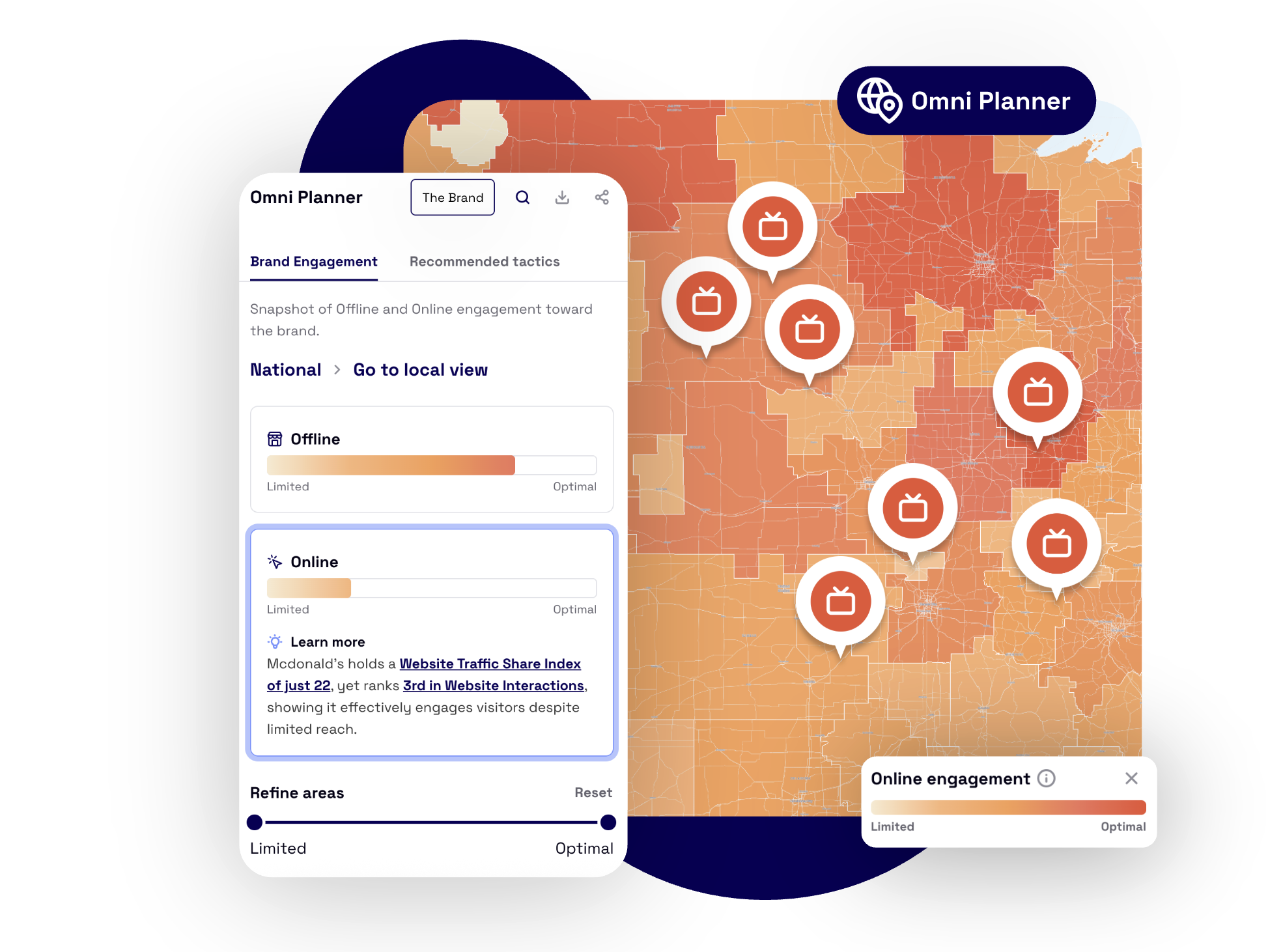
As consumer journeys blur online and offline, planning in silos no longer works. Omni Planner brings digital and real-world engagement together in one planning experience, giving marketers a clear, localized view of how audiences discover, engage, and convert across channels.
By unifying online awareness and engagement with offline foot traffic and store preference, Omni Planner enables faster, smarter media planning at the market level, without manual workflows or fragmented tools. The result: more relevant strategies, less wasted spend, and measurable impact.
Looking Ahead to 2026
As we move into 2026, the channel-less consumer will continue to evolve, demanding greater personalization, efficiency, and relevance. Economic pressures will intensify the need for measurable marketing that proves its value across both digital and physical touchpoints.
Brands that invest now in AI-driven planning, omnichannel attribution, and dynamic localized creative will be well-positioned to lead. Channel-less commerce isn’t just a defining trend of 2025; it’s the operating model that will shape retail’s next chapter.